

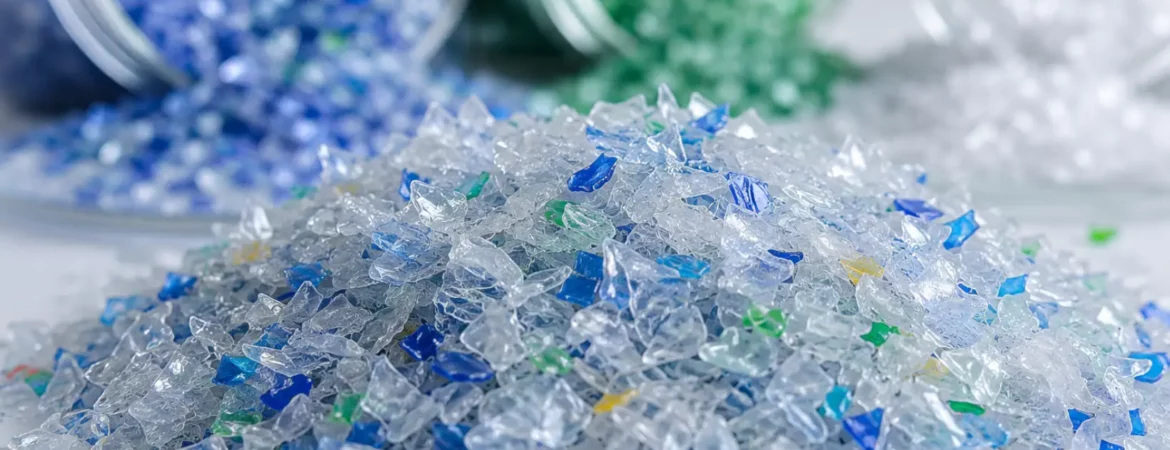
Recycled PET is now a strategic solution for manufacturers seeking to reduce their environmental impact while maintaining high technical performance. Through plastic recycling and the circular economy, this material makes it possible to transform PET waste into new industrial resources.
Understanding Recycled PET
The PET (polyethylene terephthalate) is one of the most widely used plastics in the world. Lightweight, durable, and fully recyclable, it is primarily used in the manufacture of beverage bottles, food packaging, and certain textile products.
After collection, PET waste undergoes a rigorous recycling process. It is first sorted to separate the different types of plastic, then washed to remove impurities. The bottles are then crushed into flakes, or PET flakes, which are a high-quality raw material for new industrial applications.
This process gives plastic a second life while conserving natural resources and reducing the amount of waste sent to landfills.
Why Is Recycled PET Becoming Essential for the Industry?
The use of recycled PET is growing steadily worldwide. This trend can be attributed to several economic, environmental, and regulatory factors.
Reducing the environmental footprint
The production of virgin plastic requires the extraction of fossil resources and consumes a significant amount of energy. In contrast, recycling PET significantly reduces greenhouse gas emissions, energy consumption, and the use of raw materials.
By incorporating rPET into their manufacturing processes, companies are actively contributing to the transition to a circular economy while meeting consumers' growing expectations regarding environmental responsibility.
Meeting New Market Demands
International markets are changing rapidly. Many manufacturers, distributors, and brands are committed to incorporating an increasing proportion of recycled materials into their products and packaging.
This trend is also driven by environmental regulations, which encourage plastic recycling and promote the use of recycled materials to reduce waste and carbon emissions.
For manufacturers, having a reliable supply of recycled PET is therefore becoming a real competitive advantage.
Ensuring Industrial Performance
Contrary to popular belief, high-quality recycled PET offers performance comparable to that of virgin material in many applications.
Thanks to modern industrial processes for washing, optical sorting, and quality control, PET flakes have characteristics that meet manufacturers’ requirements. Their consistent quality allows for efficient integration into production lines, while ensuring the reliability of the finished products.
The Many Uses of Recycled PET
Recycled PET flakes are used in a wide range of industries:
- Packaging
- , for the manufacture of new bottles and containers; ;
- The Textile Industry, where they are processed into fibers used in clothing, carpets, and technical fabrics; ;
- The Automotive Industry, for certain components and coatings; ;
- Building Materials, incorporated into innovative and sustainable solutions; ;
- Consumer Products, which are incorporating more and more recycled materials in order to reduce their environmental impact.
This diversity of applications demonstrates that PET recycling is now an essential link in many industrial value chains.
Collection: The First Step Toward High-Quality Recycling
Before a PET bottle can be turned into a new raw material, it must follow a well-defined process. The quality of recycling depends largely on the effectiveness of collection and sorting at the source.
This is where ECOLLECT. By offering tailored solutions to businesses, local governments, and various waste generators, ECOLLECT facilitates the collection of recyclable plastics and their diversion to the appropriate recovery channels. The collection, transportation, and traceability of waste are essential steps in ensuring that recovered materials can be recycled under the best possible conditions.
Thanks to efficient organization and rigorous flow management, plastic waste is no longer considered scrap but rather a resource that can be reintroduced into the circular economy. This approach helps reduce the volume of waste sent to landfills, while promoting the creation of value from existing materials.
Ecollect, your partner for recycled PET supplies
The circular economy relies on collaboration among all stakeholders in the value chain. By ensuring efficient collection and delivery to recycling facilities, ECOLLECT is actively involved in this process.
Beyond simple waste management, the company helps organizations improve their environmental practices by offering solutions that promote sorting at the source, the recovery of recyclable materials, and waste traceability. These services enable companies to strengthen their corporate social responsibility (CSR) initiatives while helping to conserve natural resources.


Leave A Comment