

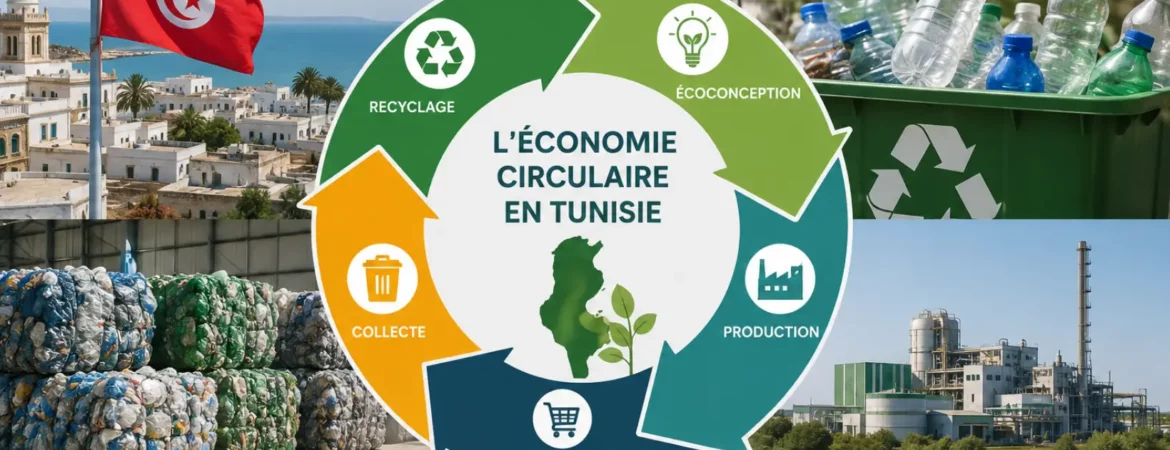
The transition to a more sustainable economy is no longer just a trend—it is becoming a real driver of competitiveness. In Tunisia, initiatives promoting the circular economy are on the rise, offering businesses new opportunities to optimize their resources, reduce waste, and create value.
A New Way of Producing and Consuming
Unlike the traditional economic model based on the «produce, consume, dispose» principle, the circular economy aims to extend the life cycle of raw materials.
Every piece of waste becomes a potential resource that can be collected, sorted, recycled, and then reintroduced into the industrial process. This approach helps limit the extraction of new natural resources while reducing the environmental impact of economic activities.
Today, this vision is gradually becoming the standard among manufacturers, local governments, and consumers.
Tunisia Is Accelerating Its Green Transition
In response to environmental challenges, Tunisia is accelerating the development of industries dedicated to recycling and waste recovery.
The country has significant strengths:
- a dynamic manufacturing industry; ;
- a strategic location between Europe and Africa; ;
- a surge in investments related to sustainable development; ;
- significant potential for the recycling of plastic waste.
This trend also meets the expectations of international markets, which demand products that incorporate more recycled materials and are manufactured using more sustainable processes.
Recycling: A Driver of Value Creation
Recycling is no longer just about reducing waste. It is becoming a key driver of economic performance.
For businesses, there are many benefits:
- reduction in the consumption of virgin raw materials; ;
- better control over procurement costs; ;
- reduction in the carbon footprint; ;
- improving the brand image among customers and partners; ;
- compliance with international environmental requirements.
This momentum also fosters the emergence of new industrial sectors that create jobs and drive innovation.
The Essential Role of Specialized Stakeholders
The development of the circular economy depends on an efficient value chain.
Specialized companies are involved at every stage:
- waste collection; ;
- sort; ;
- preparation of recyclable materials; ;
- conversion into new raw materials; ;
- reintegration into industrial processes.
Thanks to this system, waste becomes a resource that can fuel new production cycles.
Innovation for Recycling
New technologies are profoundly transforming the industry.
Recycling centers now use high-performance equipment that enables them to:
- more precise sorting of materials; ;
- higher quality of recycled materials; ;
- optimization of industrial yields; ;
- a reduction in losses.
These innovations are boosting manufacturers' confidence in the use of recycled materials, particularly for engineering plastics and packaging.
A Collective Responsibility
The success of the circular economy depends on the involvement of all stakeholders:
- companies; ;
- local governments; ;
- citizens; ;
- industrial; ;
- recycling partners.
Every effort to sort waste, every investment in infrastructure, and every initiative to promote waste recovery helps build a more resilient economy.
Conclusion
Today, the circular economy is much more than just an environmental issue: it is a true driver of economic development. By investing in waste collection, recycling, and recovery, companies are helping to build an industry that is more sustainable, more competitive, and better prepared for the challenges of the future.

