

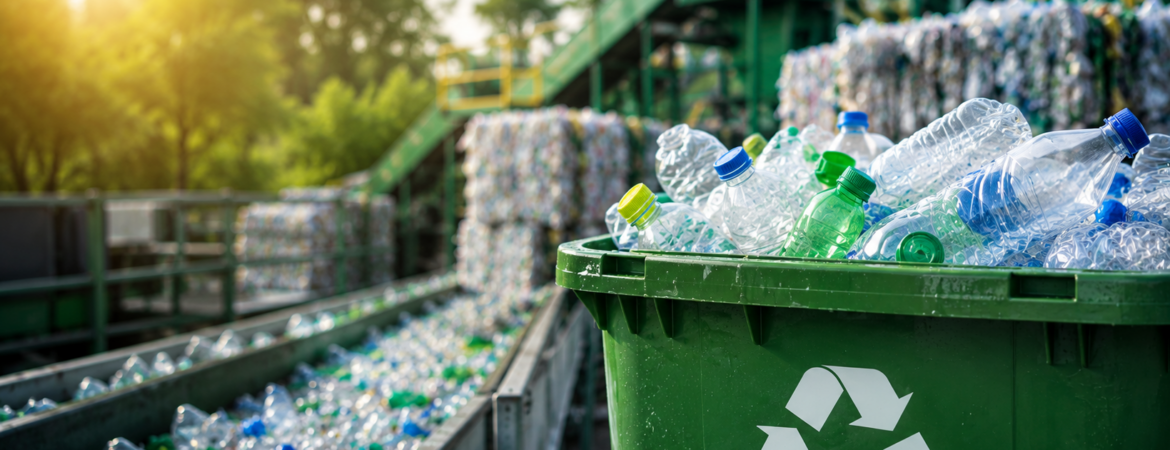
At a time when environmental challenges are mounting, the recycling industry is undergoing a profound transformation thanks to technological advances. Long viewed as a primarily manual process, recycling now relies on innovative solutions that improve the collection, sorting, traceability, and recovery of waste.
Artificial intelligence (AI), automation, the Internet of Things (IoT), and data analytics enable companies to increase efficiency while meeting growing sustainability requirements. For waste management stakeholders, these technologies are a key driver for accelerating the transition to a circular economy.
How Are Smart Technologies Transforming Recycling?
Technological innovations are redefining every stage of the waste management chain. From collection to material recovery, digital tools help optimize operations, reduce costs, and improve the quality of recycled materials.
This trend is particularly significant in a context where waste volumes are increasing and companies are seeking more effective solutions to meet their environmental goals.
Artificial Intelligence for Plastic Waste Sorting
Collection is the first step in the recycling process. Today, it is becoming more efficient thanks to connected technologies.
Sensors installed on the containers allow for real-time monitoring of their fill levels. The data collected is then analyzed to optimize collection routes, avoid unnecessary trips, and reduce fuel consumption.
This approach has several advantages:
- better planning of interventions; ;
- a reduction in transportation-related emissions; ;
- optimization of logistics costs; ;
- an improvement in service quality.
For companies such as ECOLLECT, these innovations make it possible to offer increasingly efficient collection solutions tailored to customer needs and environmental challenges.
Artificial Intelligence for Waste Sorting
Sorting is a critical step in ensuring high-quality recycling. Today, artificial intelligence-based technologies make it possible to quickly identify different types of materials using cameras, optical sensors, and image analysis systems.
This equipment is capable of accurately identifying plastics, metals, cardboard, and glass, and then automatically directing each material to the appropriate recycling stream.
There are many benefits:
- greater sorting accuracy; ;
- a reduction in human error; ;
- an increase in the volume of recycled materials collected; ;
- an improvement in the quality of materials intended for recycling.
By improving the efficiency of sorting centers, artificial intelligence helps recover more waste and minimize losses.
Traceability: A Strategic Issue
Beyond collection and sorting, digital technologies are also improving waste traceability. Companies are increasingly required to be able to track the path of their waste, from generation to recovery.
Digital platforms now make it possible to record the various stages of processing, generate detailed reports, and facilitate regulatory compliance.
This transparency meets the expectations of companies committed to corporate social responsibility (CSR) and serves as a way to demonstrate their commitment to sustainable development.
ECOLLECT: Innovation for Responsible Waste Management
In a constantly evolving industry, ECOLLECT supports businesses by offering modern waste collection and management solutions. By leveraging digital tools, streamlined operations, and an approach focused on material recovery, the company helps improve operational efficiency throughout the waste management chain.
This approach ensures better traceability of waste streams, facilitates sorting at the source, and directs waste to the most appropriate recycling channels. Innovation thus becomes a key driver for improving organizations’ environmental performance.
The future of recycling is already underway
Smart technologies will continue to transform the industry in the years to come. The automation of sorting centers, predictive analysis of waste streams, and the development of connected solutions will further improve the performance of recycling systems.
For businesses, investing in these innovations is not just about modernizing their practices. It is also about meeting new market expectations, strengthening their competitiveness, and actively contributing to the conservation of natural resources.
Conclusion
The integration of smart technologies into waste management paves the way for more efficient, transparent, and sustainable recycling. By optimizing collection, sorting, and traceability, these innovations make it possible to recover more materials while reducing the environmental impact of these activities.
By helping companies manage their waste responsibly, ECOLLECT is fully aligned with this drive for innovation and contributes to the development of a circular economy in which every piece of waste can become a resource.

